

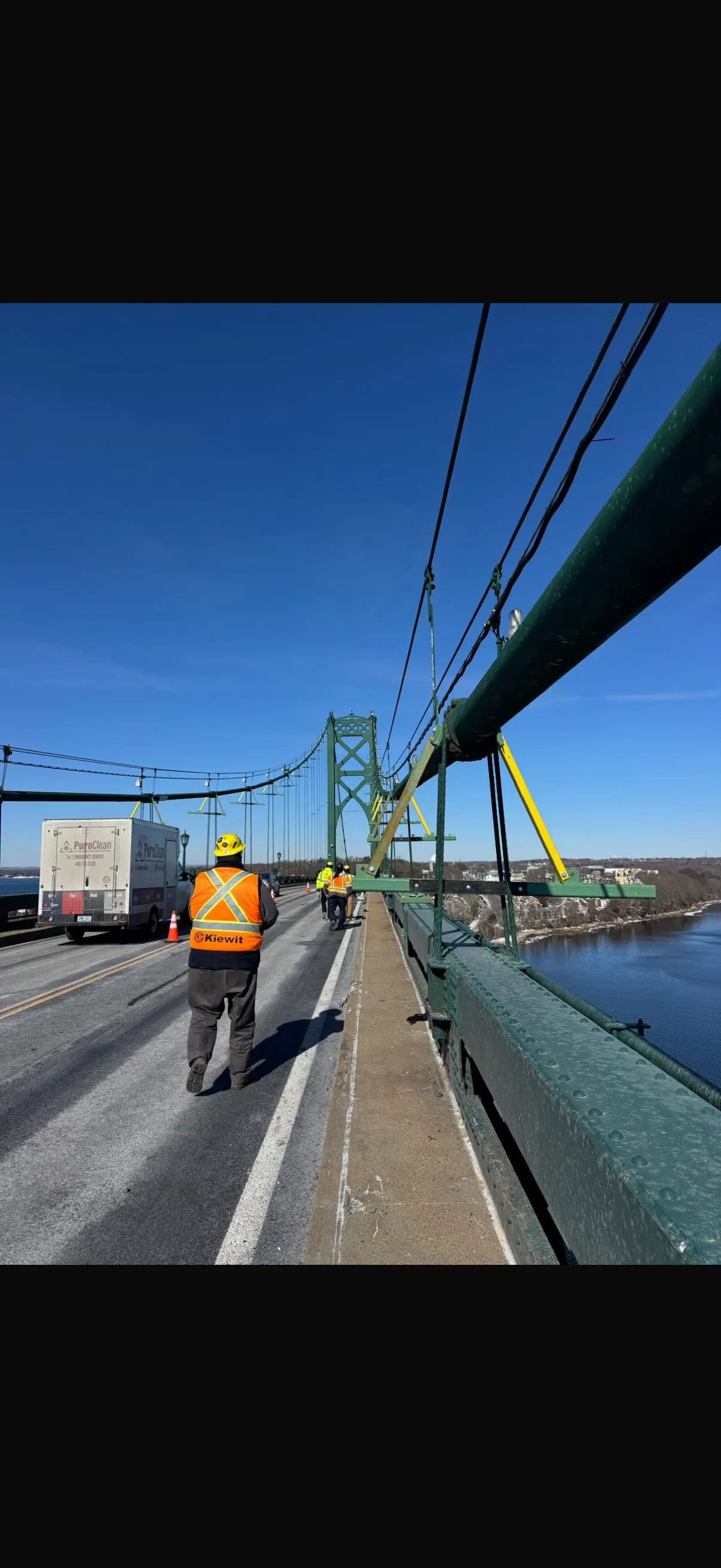
Bridge Painting & Coating
AMPP SSPC-certified protective coating systems, lead removal, power washing, and penetrating water sealer for steel and concrete infrastructure.
Protecting Critical Infrastructure
Bridge painting is not just cosmetic - it is the primary defense against structural deterioration. Our AMPP-certified crews deliver complete coating systems that protect steel and concrete bridge components for decades.
We handle the full scope of bridge coating work: environmental containment setup, surface preparation through abrasive blasting, primer application, intermediate coats, and finish topcoats. We apply industry-leading coating systems including Termarust protective coatings, chosen for their proven long-term performance on infrastructure steel, and every project meets or exceeds AMPP, AASHTO, and state DOT specifications. We're currently running a CTDOT bridge painting project in Hartford, CT, alongside our other active work across Connecticut, New York, Massachusetts, and Rhode Island.
Lead Paint Removal & Hazardous Coatings
Our AMPP QP2 accreditation qualifies us for lead-paint removal and hazardous-coatings work on bridges, structural steel, and aging infrastructure, with full containment, blast media recovery, and EPA-compliant disposal on every job. See our dedicated lead abatement page →
Power Washing & Penetrating Water Sealer
Bridge maintenance is more than paint. High-pressure power washing of bridge decks, abutments, and concrete components removes contaminants and prepares surfaces for protective treatment. Penetrating water sealer (silane/siloxane systems) follows on concrete decks and substructures, blocking water infiltration, freeze-thaw damage, and chloride intrusion from road salt. CTDOT and municipal-spec work is standard on every project.
Graffiti Removal & Localized Field Painting
Beyond full coating systems, we handle targeted maintenance work: graffiti removal from bridges, abutments, and structural steel, plus localized paint removal and field painting where spot repairs are needed. These quick-turn scopes keep infrastructure presentable and protected between major recoat cycles, and we perform them under the same DOT specifications and traffic-control protocols as our large-scale work.
Our Process
- Environmental Containment - Full enclosure systems to capture debris and meet EPA regulations
- Surface Preparation - Abrasive blasting to AMPP-SP10 (near-white) or SP5 (white metal) standards
- Coating Application - Multi-coat systems with DFT verification at each stage
- Quality Assurance - Independent thickness testing, adhesion testing, and documentation
- Containment Removal - Clean site restoration and proper waste disposal
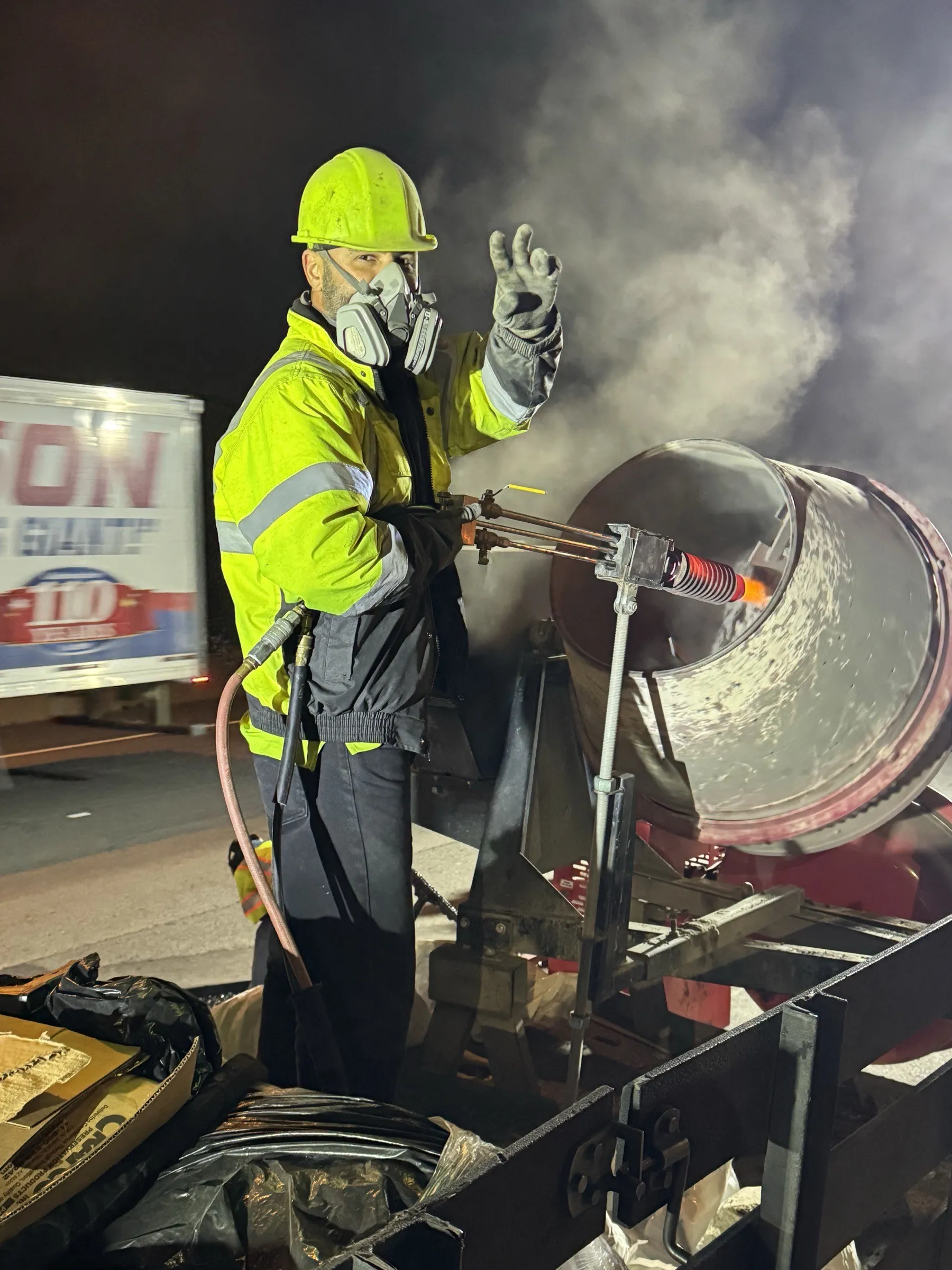
Full PPE, respirator, and AMPP-spec abrasive blasting on a bridge bearing during a nighttime lane closure.
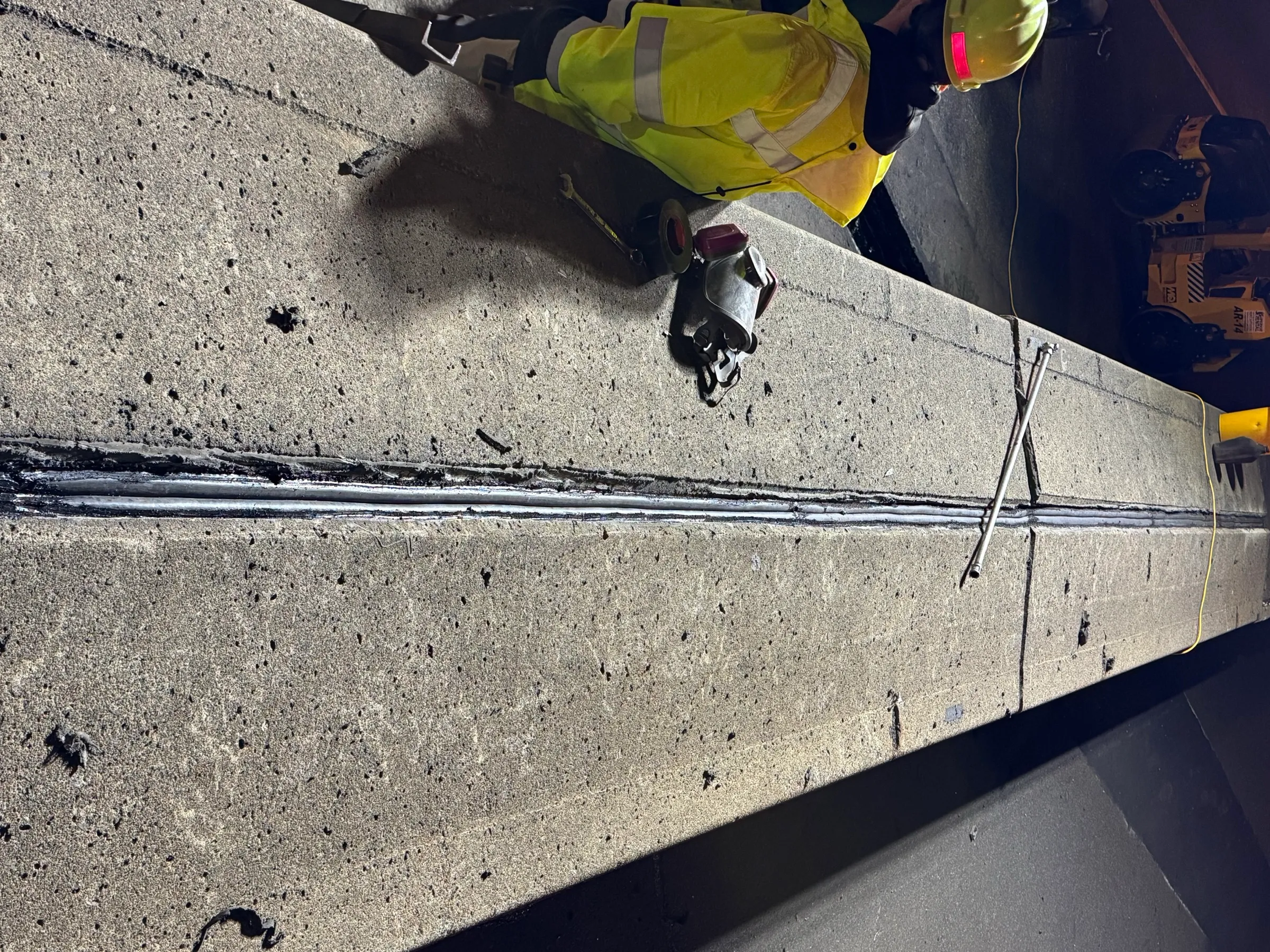
Bridge expansion joint sealing on a concrete deck. Joint replacement, sealing, and protective treatment are part of every deck-restoration scope.
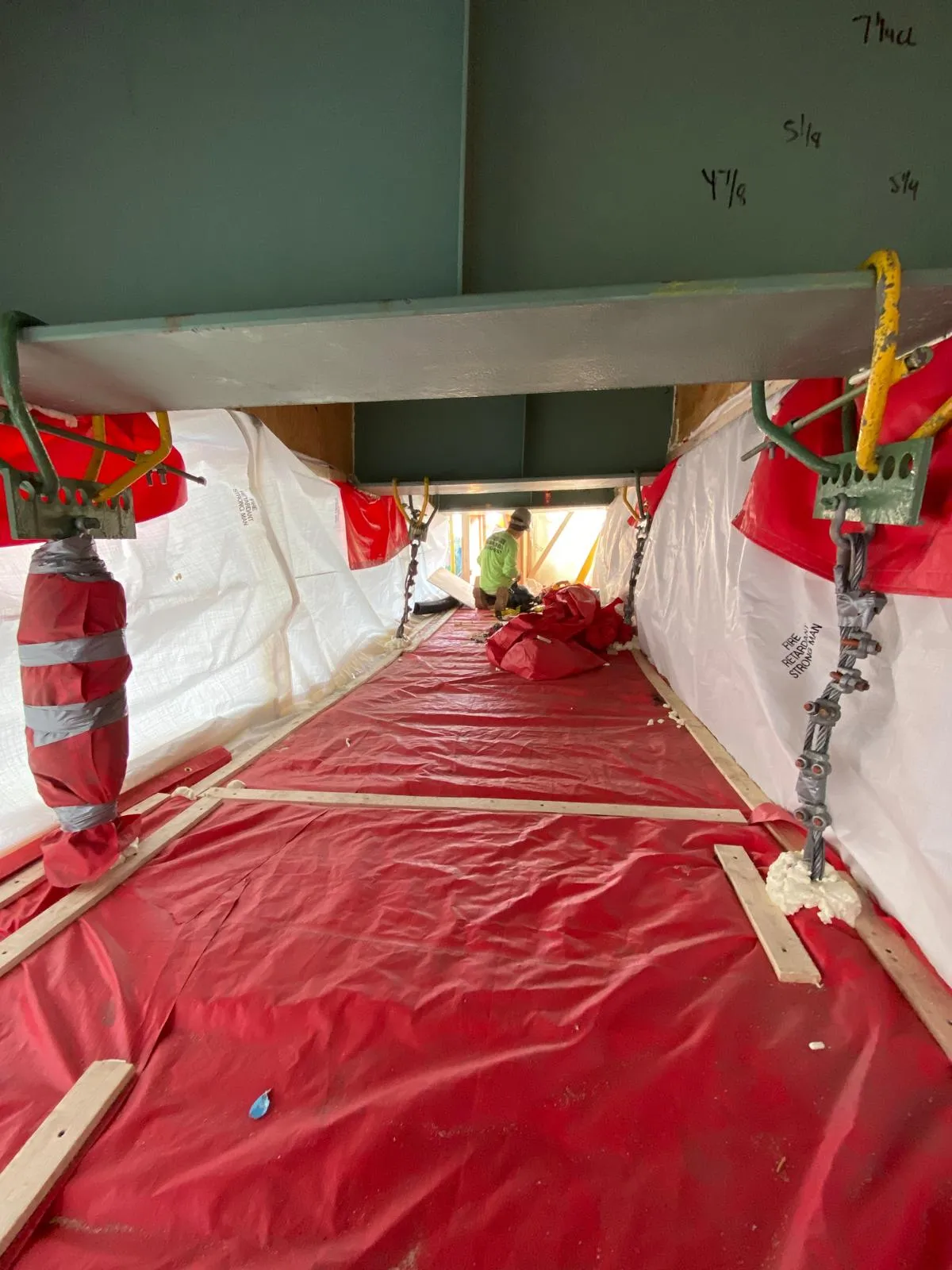
Environmental containment protects waterways and surrounding areas during surface preparation.
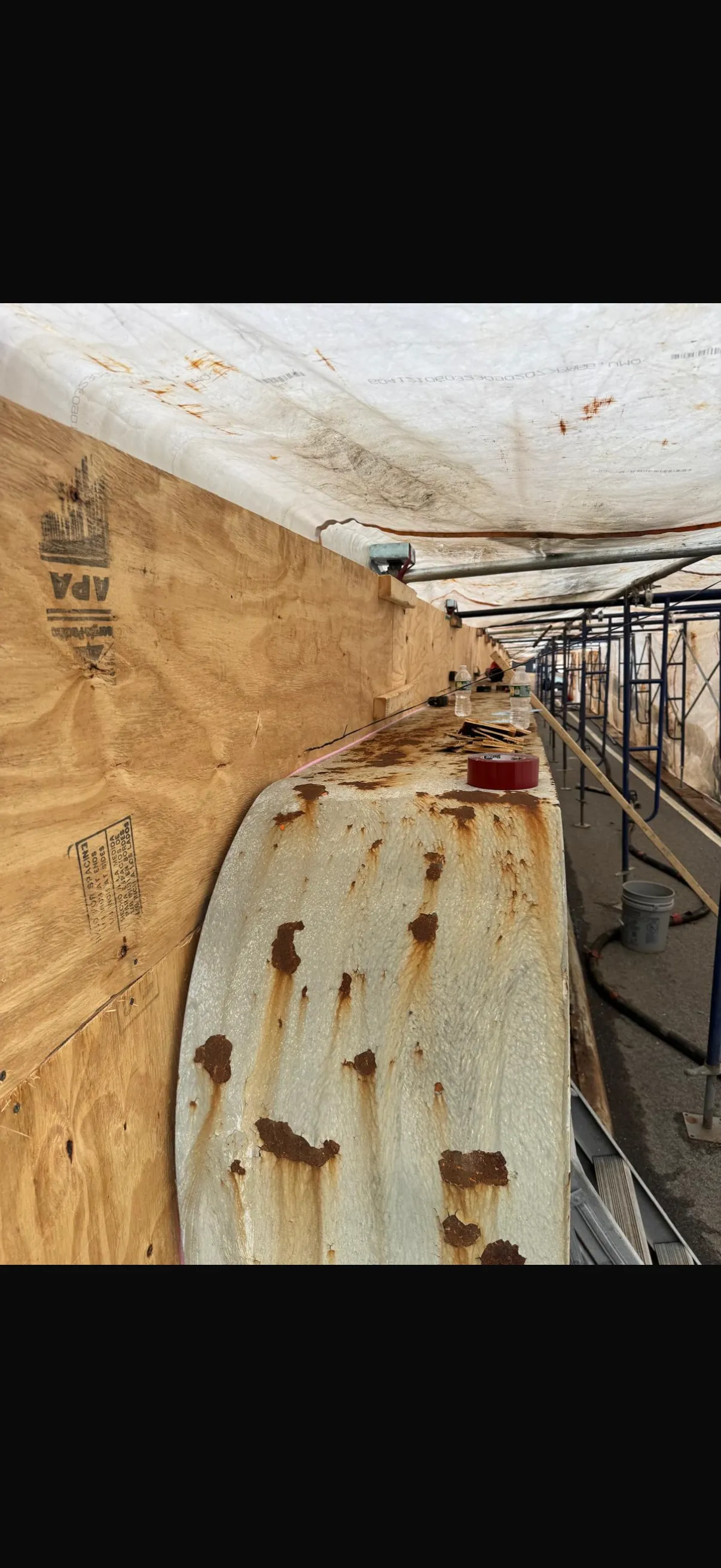
Before
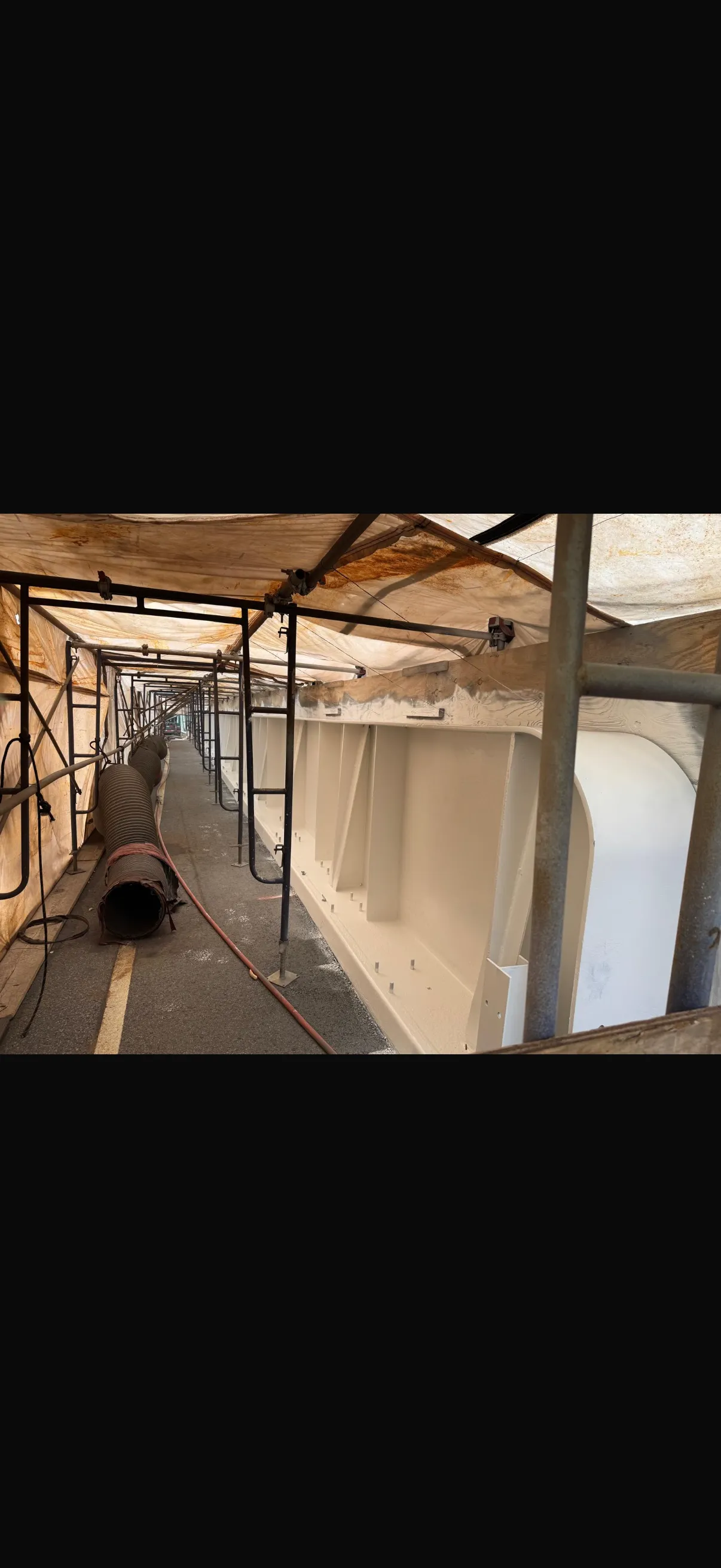
After
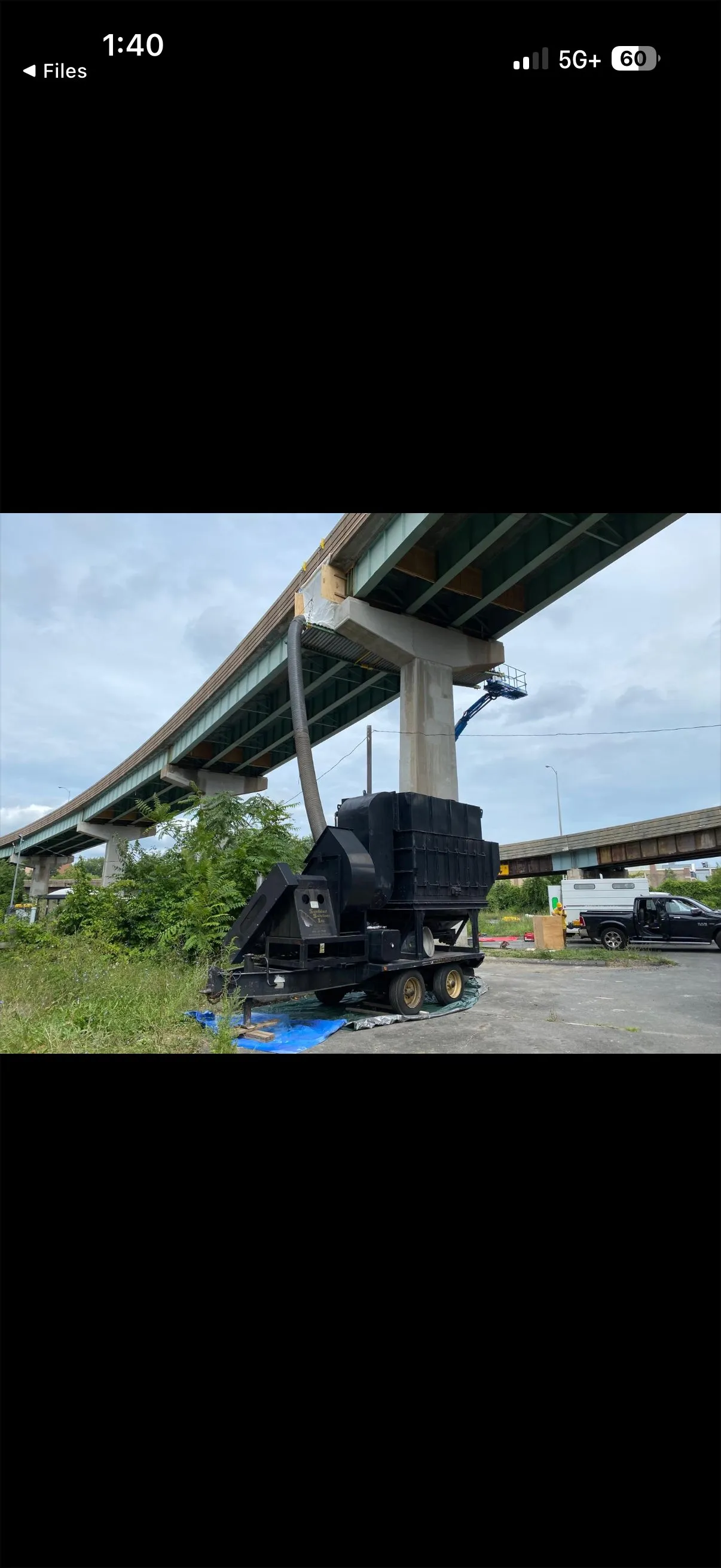
Preparation and setup for protective coating system application on bridge structural steel.
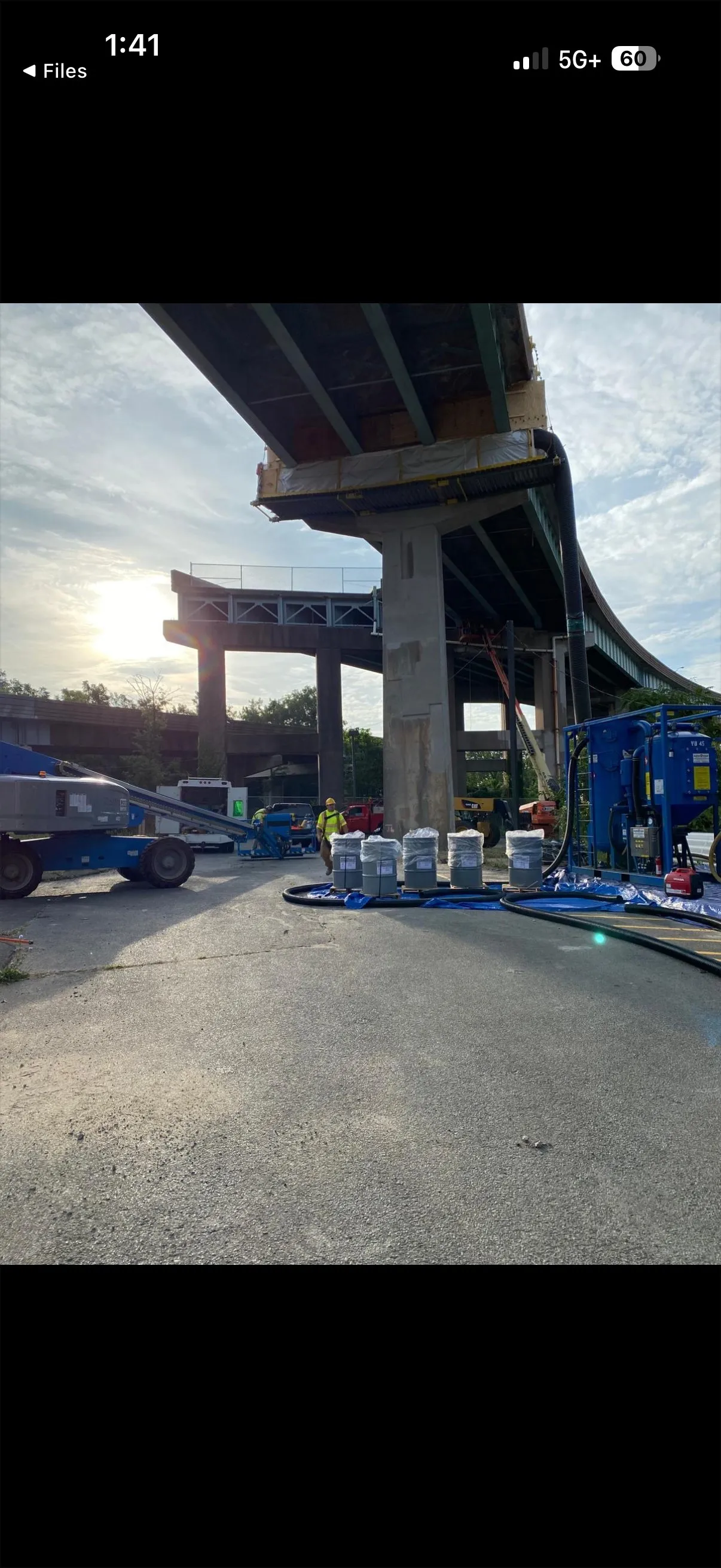
Active coating application and worksite setup for multi-coat protective systems.
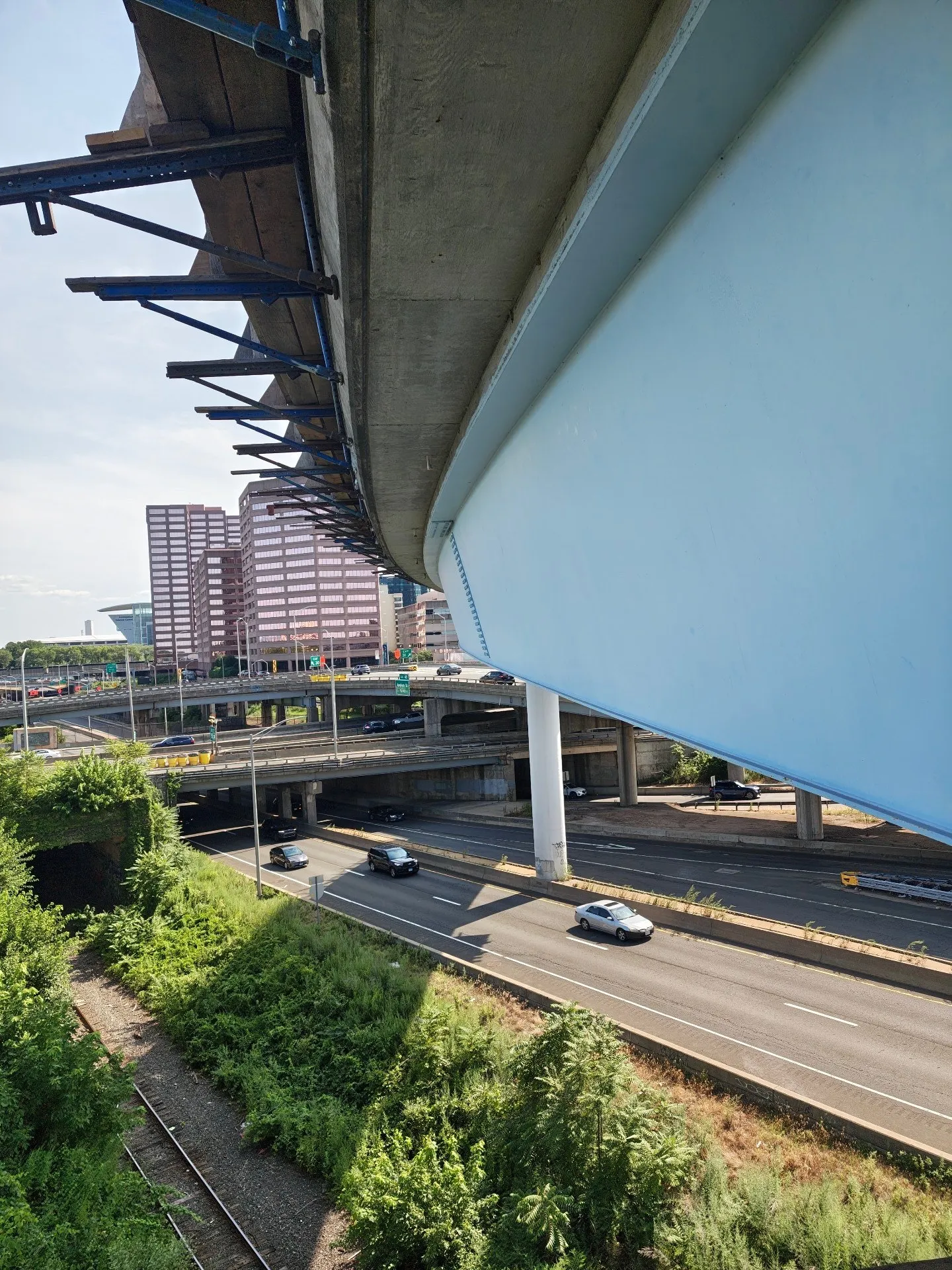
Hartford, Connecticut
Painting a Highway in the Middle of a City
The hardest part of urban bridge painting is rarely the coating. It is everything you have to build before a brush moves. On the I-84 and I-91 interchange in downtown Hartford there is no ground to stand on, so the work platform hangs off the structure itself: steel brackets pinned to the underside of the deck, timber decking laid across them, and a crew working the fascia girder from below while traffic keeps running underneath.
That is the difference between a bridge painter and a painting company. Access, containment, traffic protection, and coating all get engineered as one plan, and none of it can drop a chip of debris on the road, the rail line, or the river below. The skyline in the frame is the Connecticut Science Center and the tower at 280 Trumbull Street, roughly a quarter mile from the Asylum Street exit.
Cristiano & Son runs this class of work across Connecticut, New York, Massachusetts, and Rhode Island as a prime or as a coatings subcontractor to the region's highway contractors. If you have a structure over live traffic, we have already done the version of it with nowhere to stand.
Our Certifications
Certified for field application of protective coatings to industrial structures.
Certified for removal of hazardous coatings (lead, chromium) and all coating types from industrial and infrastructure surfaces.
Field crews also hold AMPP's C5 lead-paint-removal refresher training on top of our company-level QP1/QP2 accreditations.
Ready to Start Your Next Project?
From bridge restoration to highway guardrail installation, we bring 25 years of infrastructure expertise to every project. MBE certified in Connecticut and Rhode Island.